


Bladder & urothelial tract
Glandular neoplasms
Clear cell (adeno)carcinoma
Author: Rugvedita Parakh, M.D.

Last author update: 1 December 2014
Last staff update: 19 April 2024 (update in progress)
Copyright: 2003-2024, PathologyOutlines.com, Inc.
PubMed Search: Clear cell adenocarcinoma bladder
Table of Contents
Definition / general | Terminology | Etiology | Clinical features | Case reports | Gross description | Microscopic (histologic) description | Microscopic (histologic) description | Positive stains | Negative stains | Differential diagnosisCite this page: Parakh R Clear cell (adeno)carcinoma. PathologyOutlines.com website. https://www.pathologyoutlines.com/topic/bladderclearcell.html. Accessed April 19th, 2024.
Definition / general
- Resembles clear cell carcinoma (Müllerian type) of female genital tract
Terminology
- Also called mesonephric or mesonephroid carcinoma / adenocarcinoma
Etiology
- Either arises from Müllerian elements in the bladder (endometriosis), represents a peculiar variant of vesical adenocarcinoma of non Müllerian derivation, or represents a peculiar morphologic expression of urothelial carcinoma, with glandular differentiation often uncertain (Am J Surg Pathol 2002;190)
Clinical features
- Usually women, in bladder or urethra
- Often high stage at diagnosis; stage is important prognostic factor
Case reports
- 35 year old woman with endometriosis (Mod Pathol 1993;6:225)
- 70 year old woman with multiple recurrences of nephrogenic metaplasia of the urinary bladder and subsequent clear cell adenocarcinoma (Hum Pathol 2006;37:117)
Gross description
- Usually papillary, also sessile
- If presents as polypoidal growth, frequent ulceration is seen
Microscopic (histologic) description
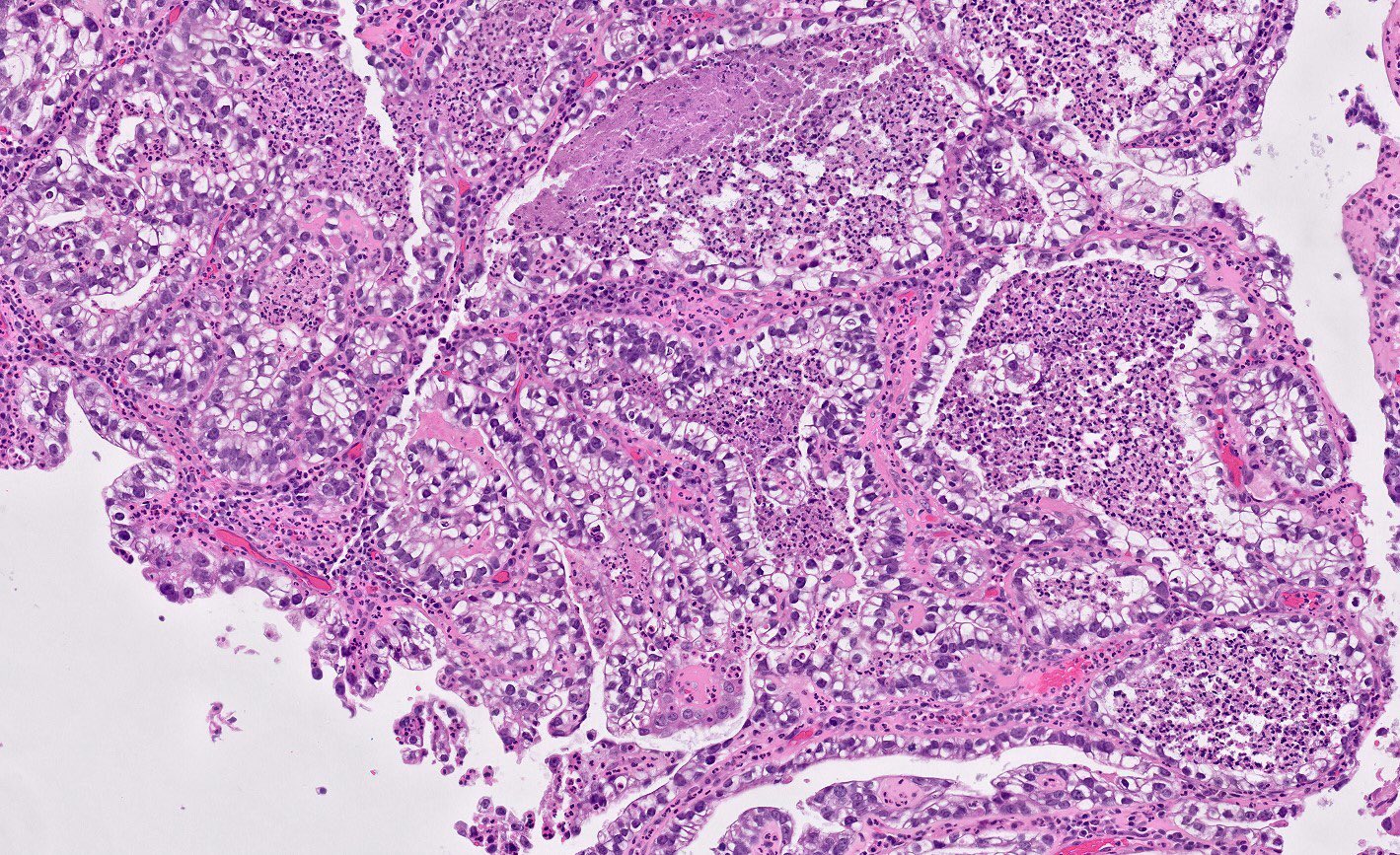
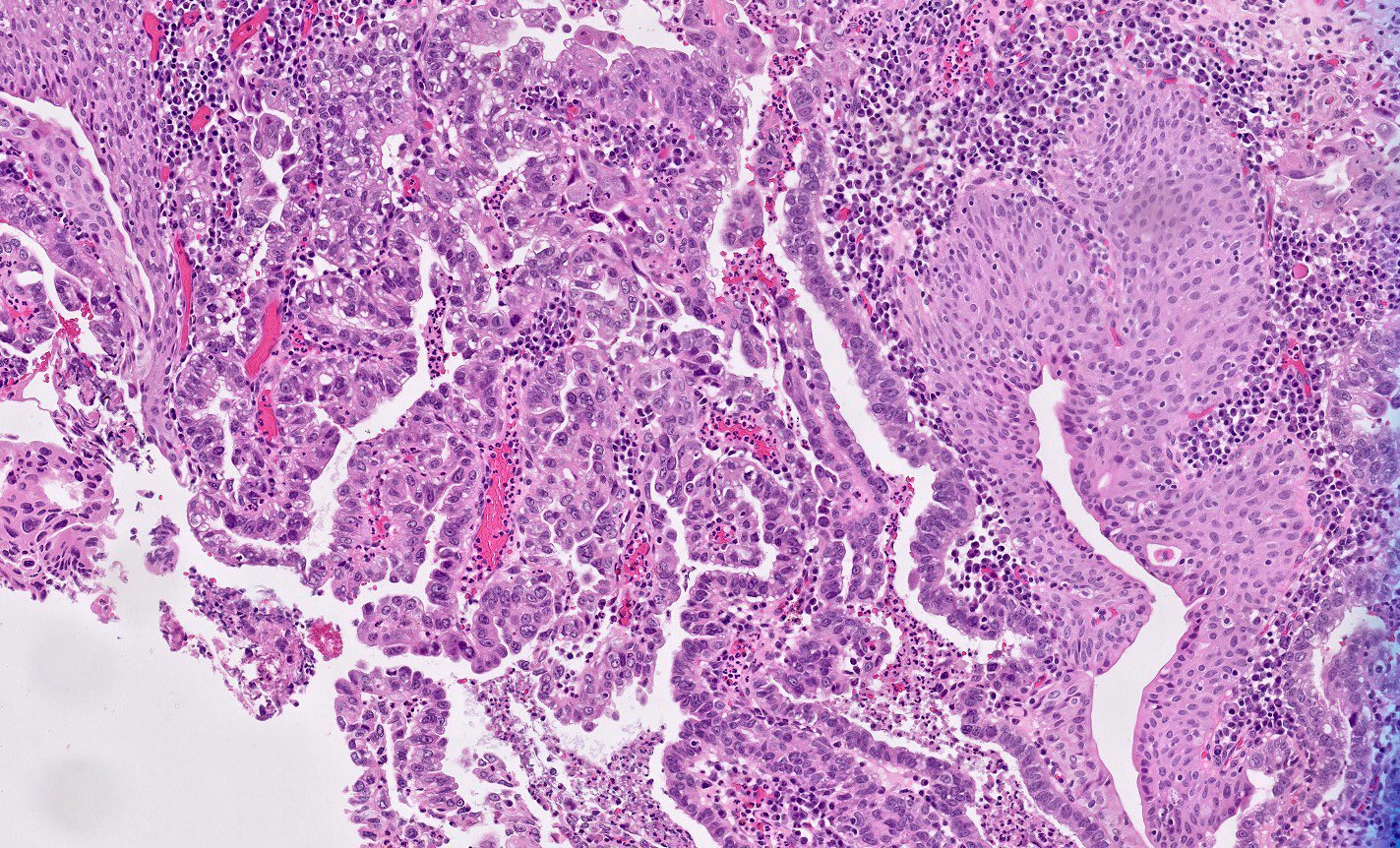
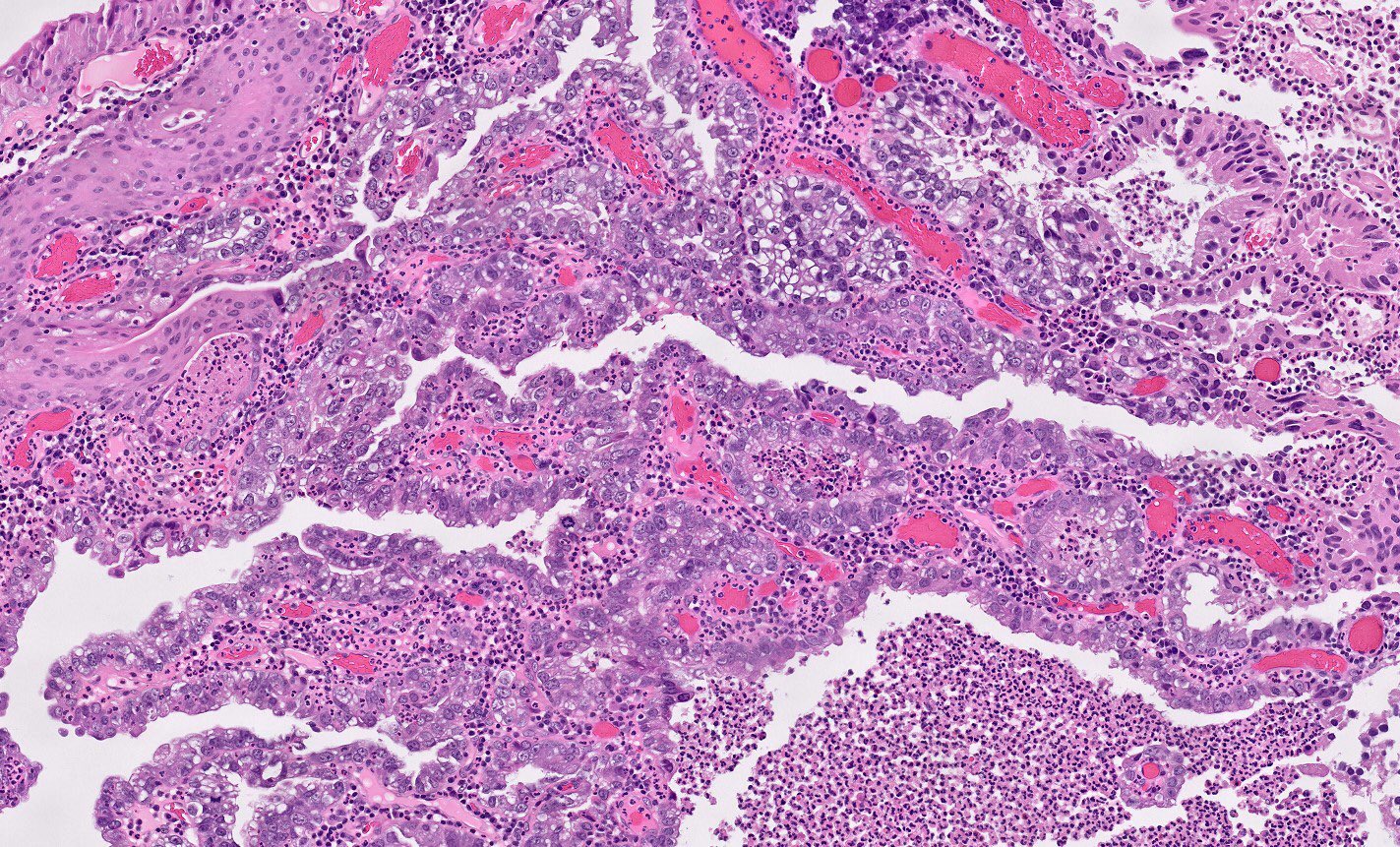
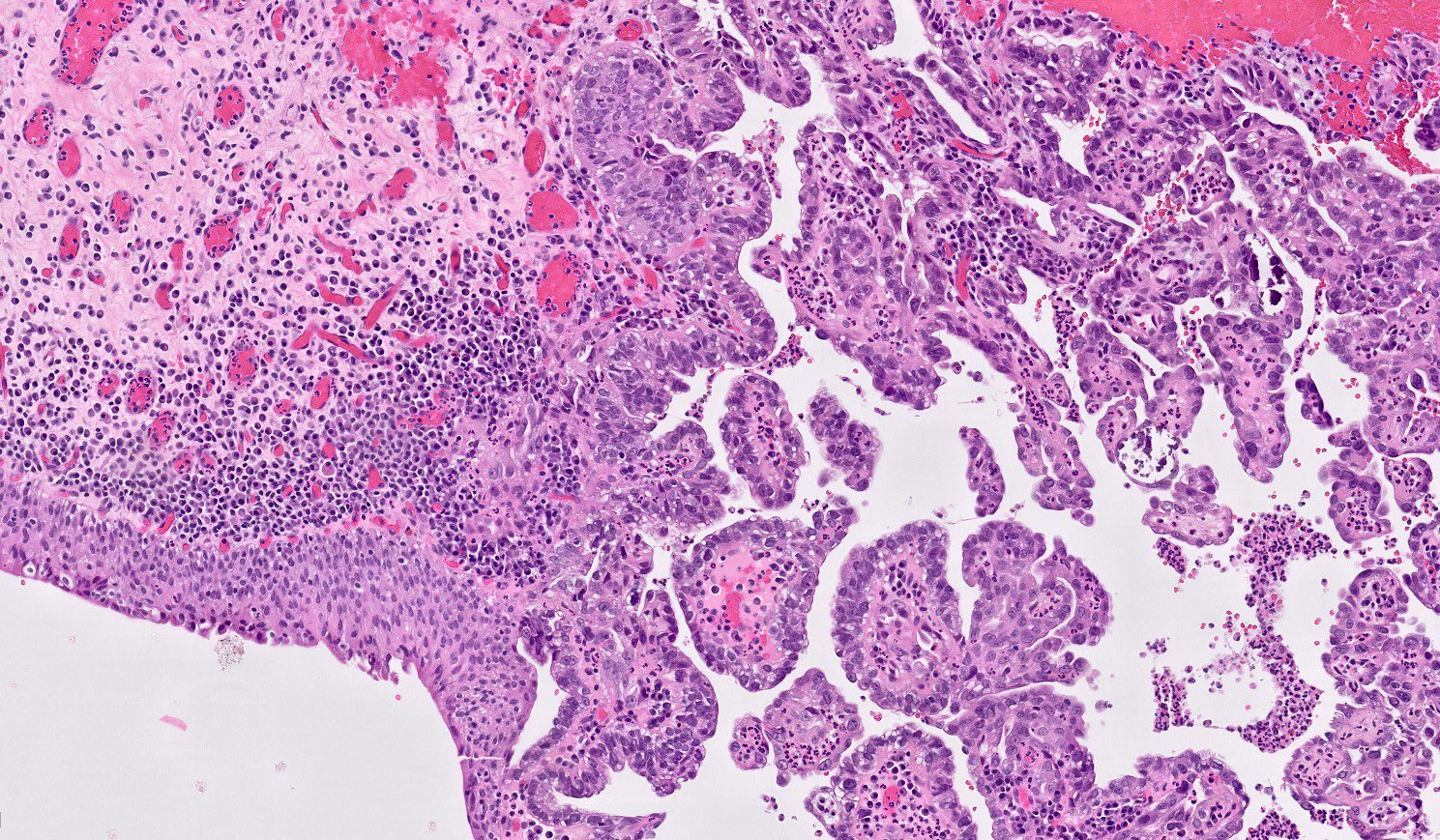
- Often papillary or tubulocystic (Am J Surg Pathol 1985;9:816)
- Flat or cuboidal neoplastic cells have abundant clear or eosinophilic cytoplasm with glycogen and frequent hobnailing
- More pleomorphic cells and more mitotic figures than adenomatoid tumor; variable necrosis
- Resembles urothelial carcinoma more than adenocarcinoma
- The papillae sometimes have hyalinized cores
- Myxoid stroma may be seen
Microscopic (histologic) description
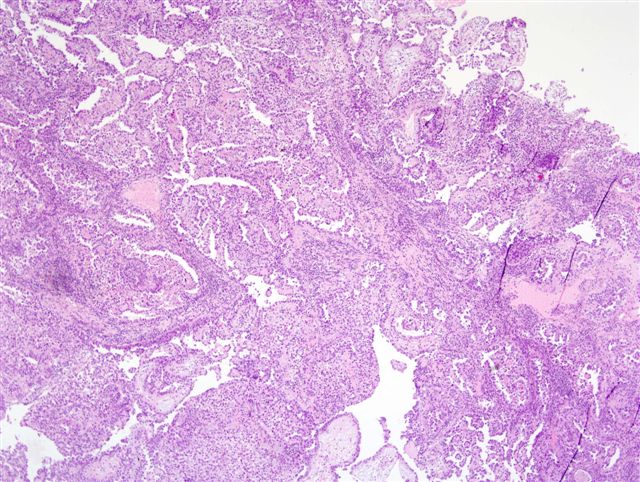
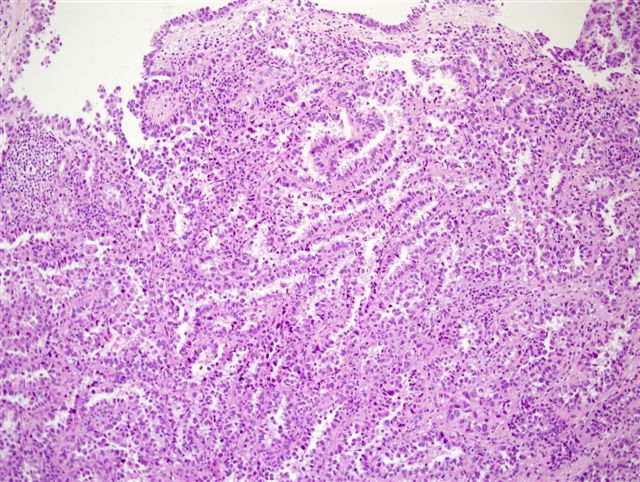
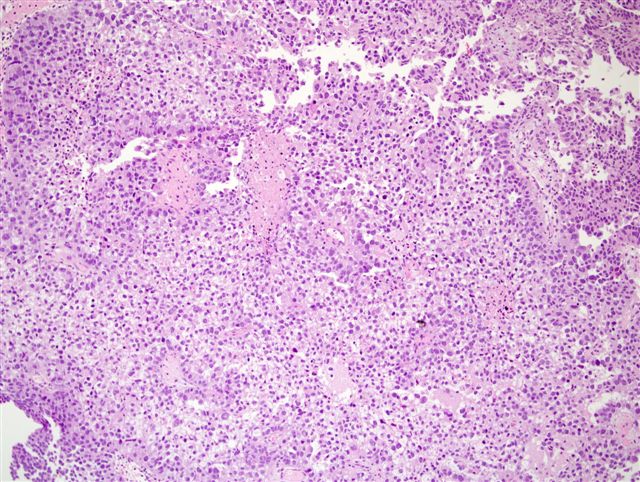

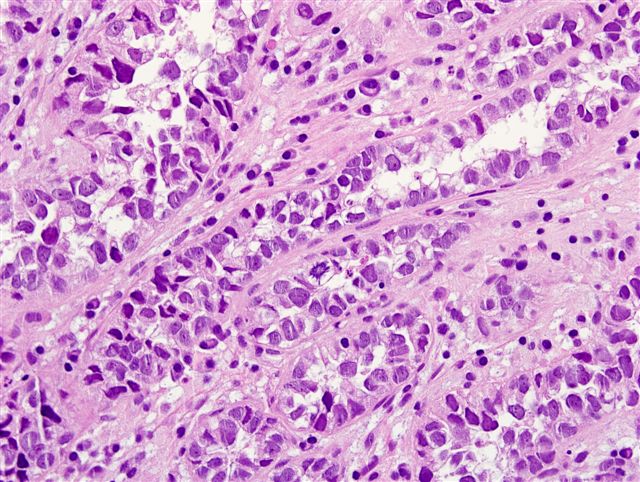
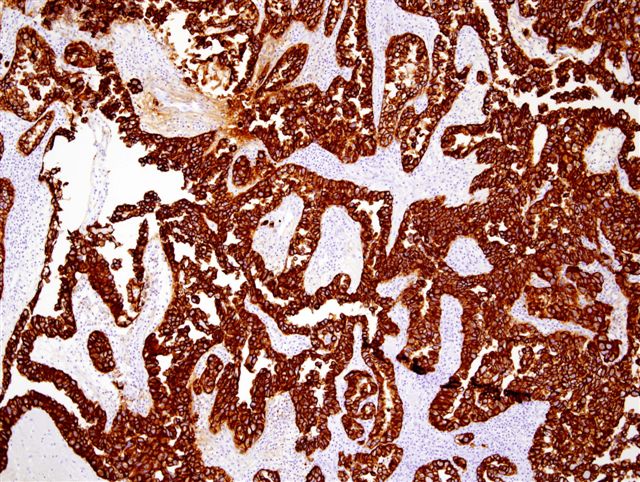
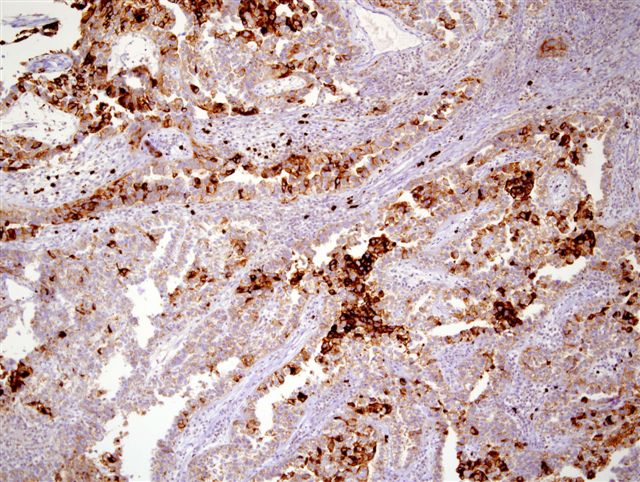
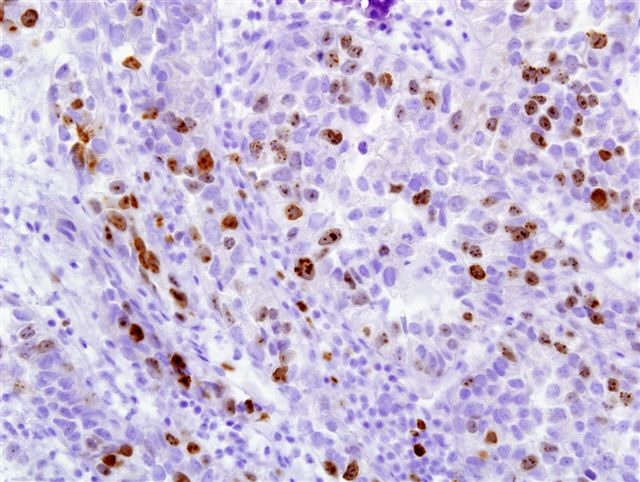
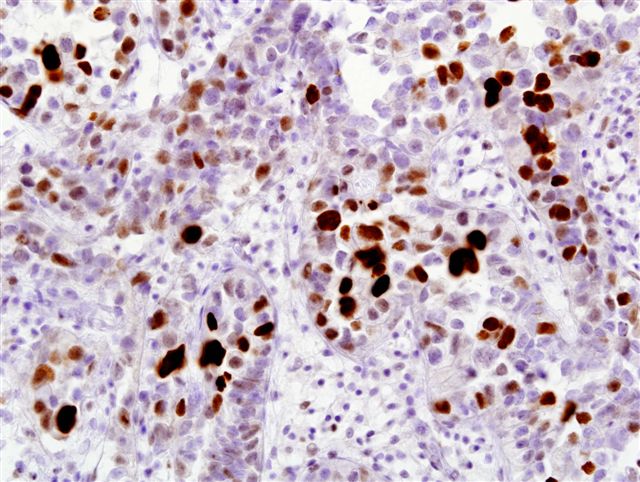
Negative stains
- CK20 (occasional positivity is noted), PSA, ER, PR (Clin Cancer Res 2008;14:1947)
Differential diagnosis
- Nephrogenic metaplasia:
- Young age, history of GU trauma
- Minimal atypia or pleomorphism, no / rare mitotic figures, no necrosis, no infiltrative growth
- Extension or metastasis from gynecologic or other clear cell carcinoma (Hum Pathol 1996;27:248, Appl Immunohistochem Mol Morphol 2010;18:396)
- Urothelial carcinoma with clear cytoplasm
- Diffuse large B cell lymphoma (Indian J Pathol Microbiol 2010;53:8790)


