


Cervix
Inflammatory / infectious
Candida / fungi
Author: Farnaz Hasteh, M.D.

Last author update: 6 November 2006
Last staff update: 22 September 2023
Copyright: 2006-2024, PathologyOutlines.com, Inc.
PubMed search: Candida cervix

Table of Contents
Definition / general | Terminology | Epidemiology | Etiology | Clinical features | Treatment | Cytology description | Cytology images | Differential diagnosis | Additional referencesCite this page: Hasteh F. Candida / fungi. PathologyOutlines.com website. https://www.pathologyoutlines.com/topic/cervixcytologyfungi.html. Accessed April 19th, 2024.
Definition / general
- Present in 3% of pap smears, doesn't necessarily indicate a symptomatic infection (Diagn Cytopathol 1999; 21:14)
Terminology
- Also called vulvovaginal candidiasis, yeast infection
Epidemiology
- Common in reproductive ages but it can occur in any age
- More common in late luteal phase of cycle
- 75% of women get Candida infection at some time during their lives
- Associated with immunosupression (steroid use, HIV and diabetes), antibiotics, chemotherapy, soaps
Etiology
- Due to changes in vaginal PH, glycogen or flora
Clinical features
- Itching, erythema
- Thick white discharge
Treatment
- Antifungals
Cytology description
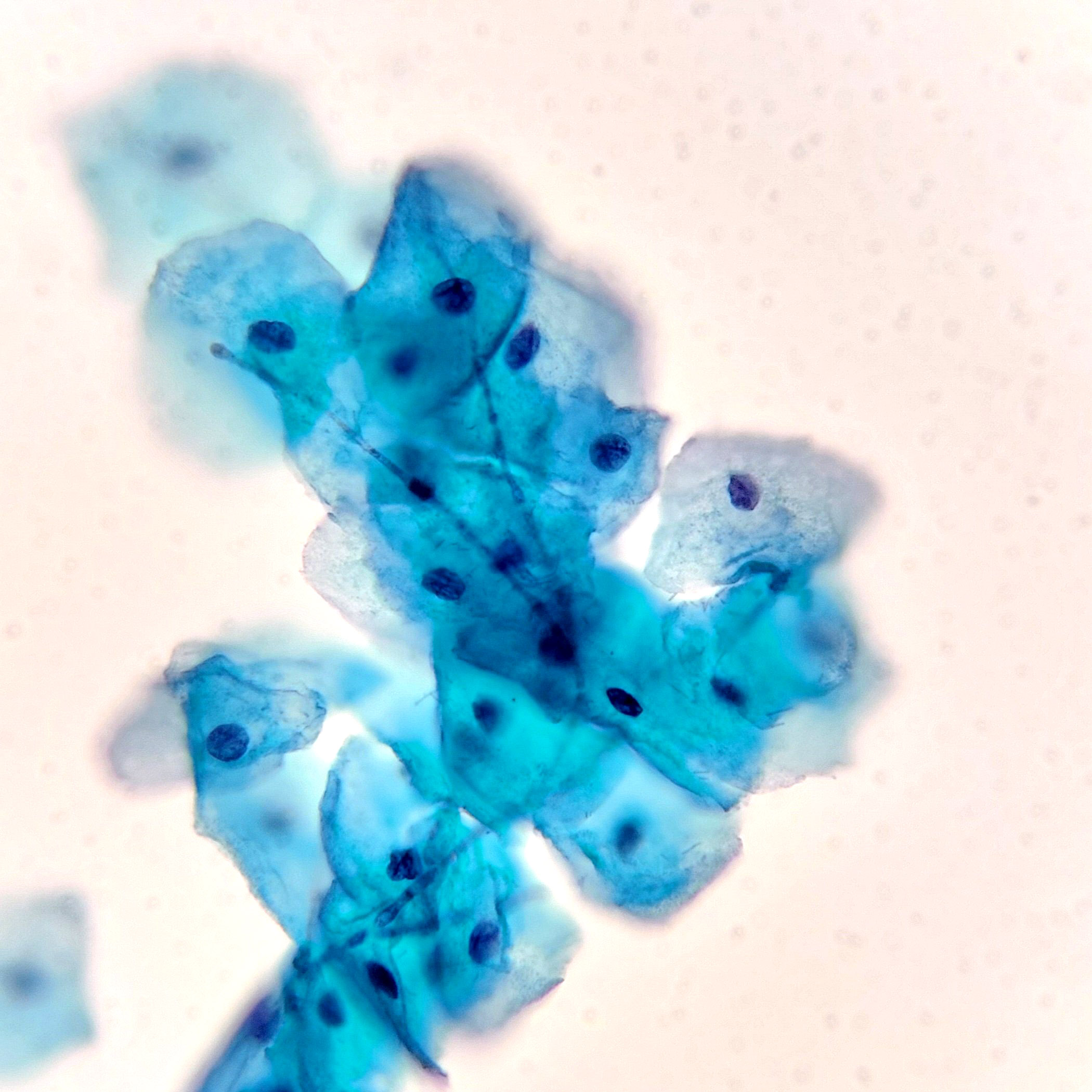
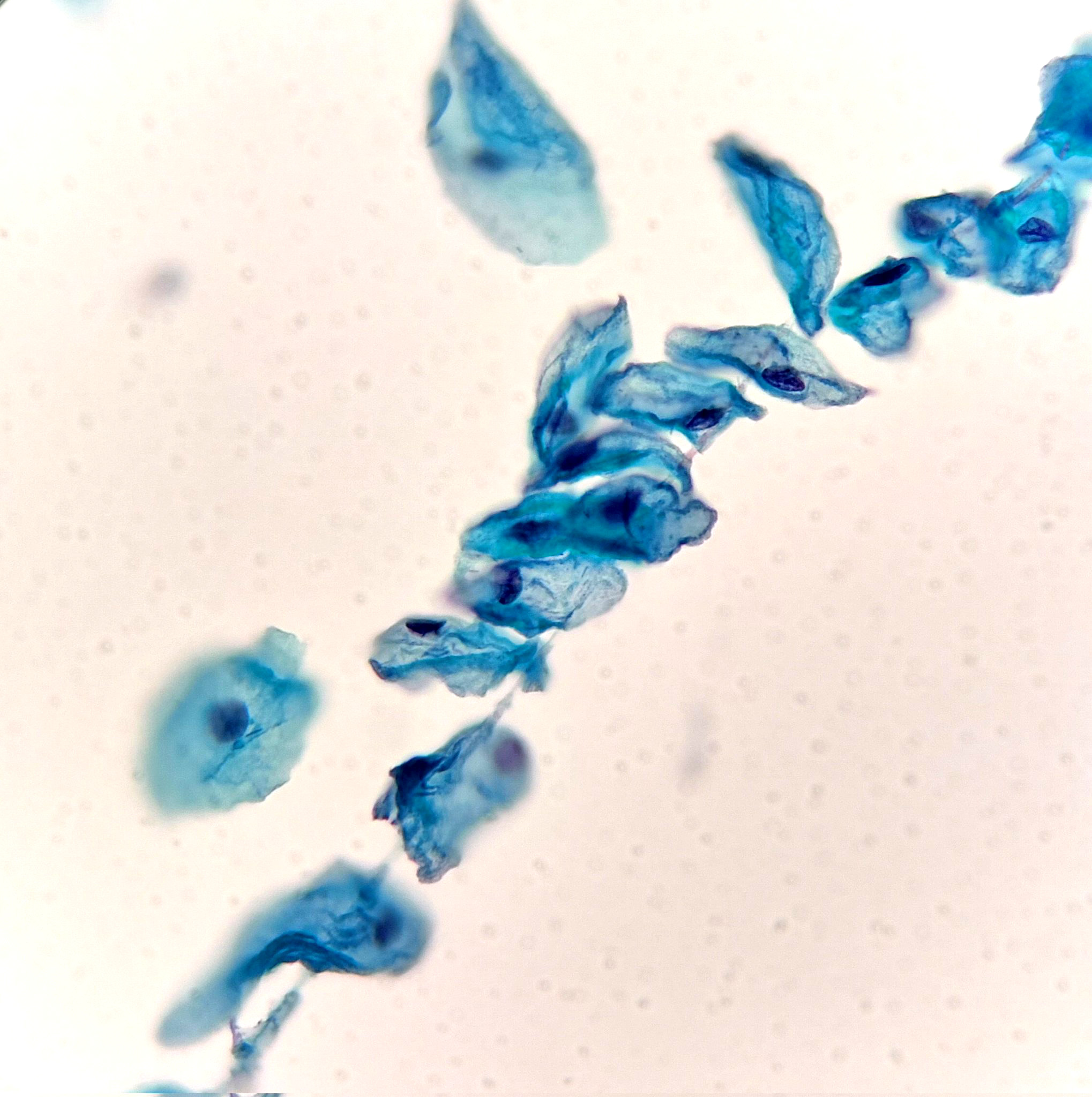
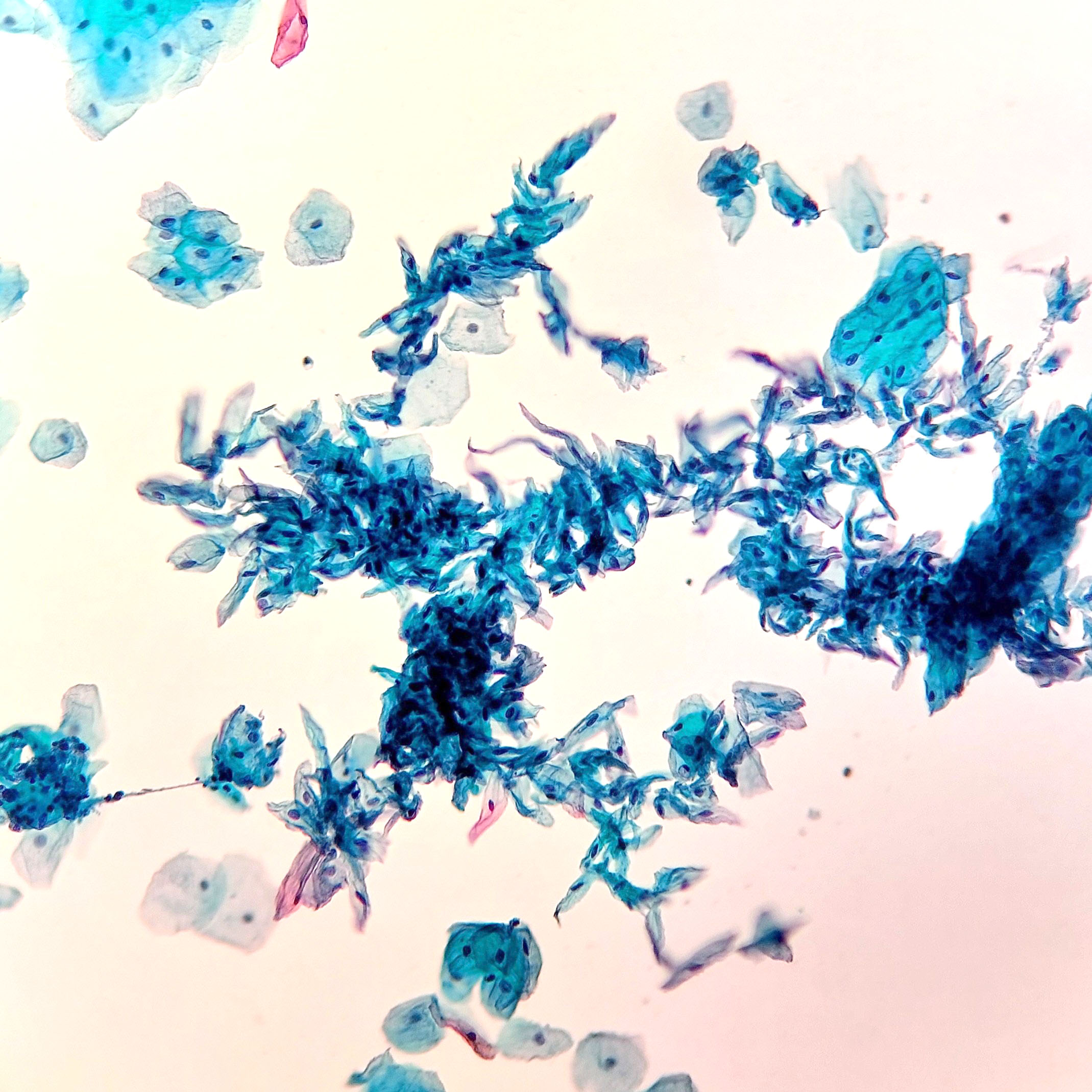
- Candida albicans: pseudohyphae and yeasts; reactive squamous epithelial cells in the form of "shish kebab"
- Geotrichum: arthroconidia (DeMay: The Pap Test: Exfoliative Gynecologic Cytology, 1st Edition, 2005)
- Candida glabarata: formerly Torulopsis glabrata; only yeast forms, no pseudohyphae (Wikipedia)
- Mild hyperkeratosis, inflammation and minimal nuclear changes (atypia)
Cytology images
Contributed by @AnaPath10 on Twitter
Candida / fungi
Candida / fungi
Candida / fungi
Images hosted on other servers:

Candida albicans
Differential diagnosis
- Mucus strands


