

Prostate gland & seminal vesicles
Squamous carcinomas
Adenoid cystic (basal cell) carcinoma
Author: Komal Arora, M.D.

Last author update: 1 February 2012
Last staff update: 2 April 2024 (update in progress)
Copyright: 2003-2024, PathologyOutlines.com, Inc.
PubMed search: prostate basal cell carcinoma

Table of Contents
Definition / general | Case reports | Microscopic (histologic) description | Microscopic (histologic) images | Positive stains | Negative stains | Additional referencesCite this page: Arora K. Adenoid cystic (basal cell) carcinoma. PathologyOutlines.com website. https://www.pathologyoutlines.com/topic/prostateadenoidbasal.html. Accessed April 19th, 2024.
Definition / general
- Also known as adenoid basal, adenoid cystic-like tumor, adenoid basal proliferation of uncertain significance
- Resembles to some extent the salivary gland tumor
- Usually indolent; cases with aggressive behavior often have large solid nests with central necrosis, high Ki67%, less staining with basal cell markers (Am J Surg Pathol 2007;31:697)
Case reports
- 67 year old man (Int J Clin Oncol 2010;15:594)
Microscopic (histologic) description
- Expansive (not circumscribed) growth pattern
- Multinodular, basaloid cells in clusters, some with punched out lumens
- Surrounding fibromyxoid stroma, squamous differentiation, merges with basal cell hyperplasia
- May be associated with minor component of usual type prostatic adenocarcinoma
- Considered malignant if extensive infiltration between normal prostate gland, extension out of the prostate, perineural invasion, necrosis or metastases
- Gleason grading of these tumors is not recommended
Microscopic (histologic) images
Contributed by Daniel Athanazio, M.D., Ph.D. and Maiara Souza, M.D.
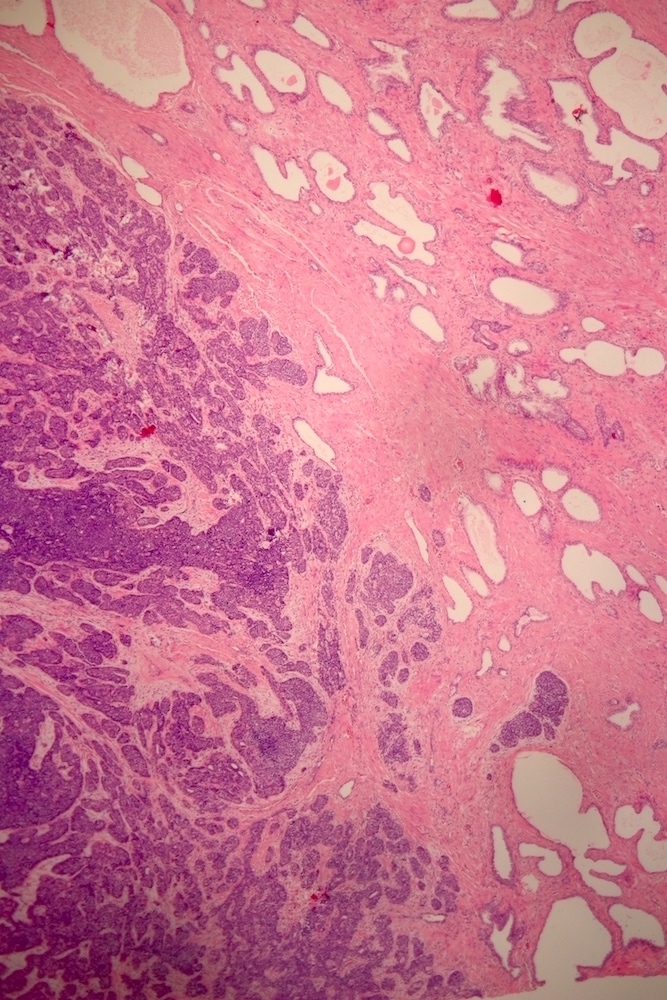
Solid growth - basaloid morphology
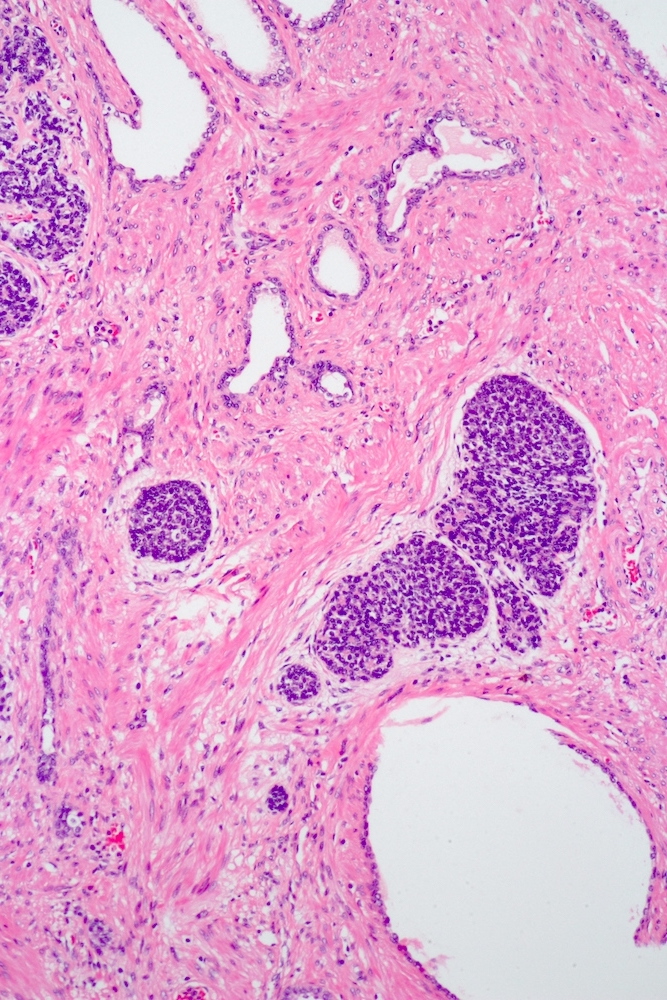
Infiltrative growth

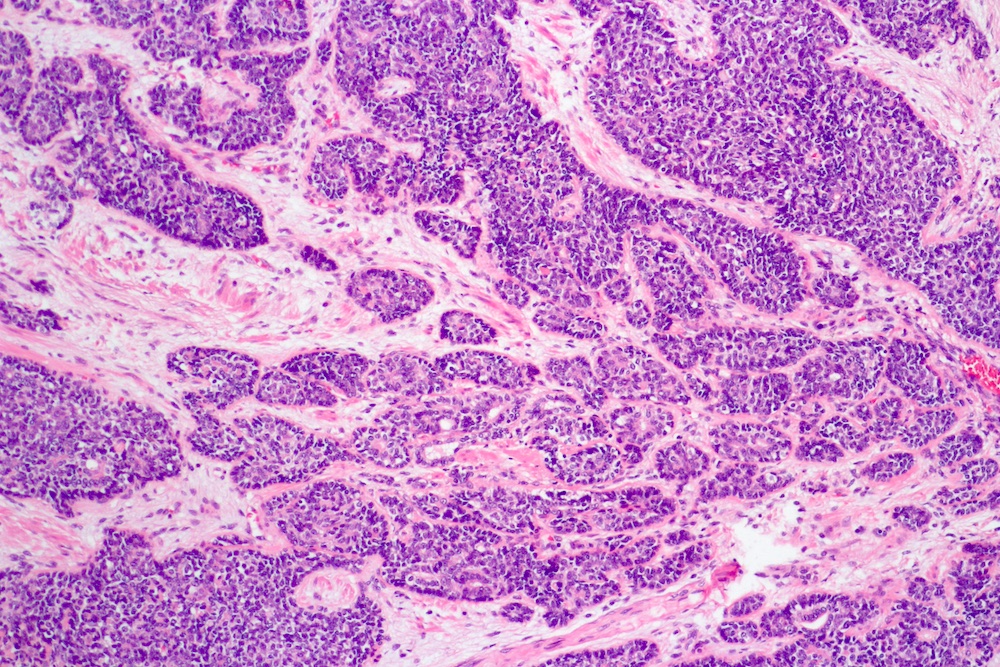
Basaloid morphology
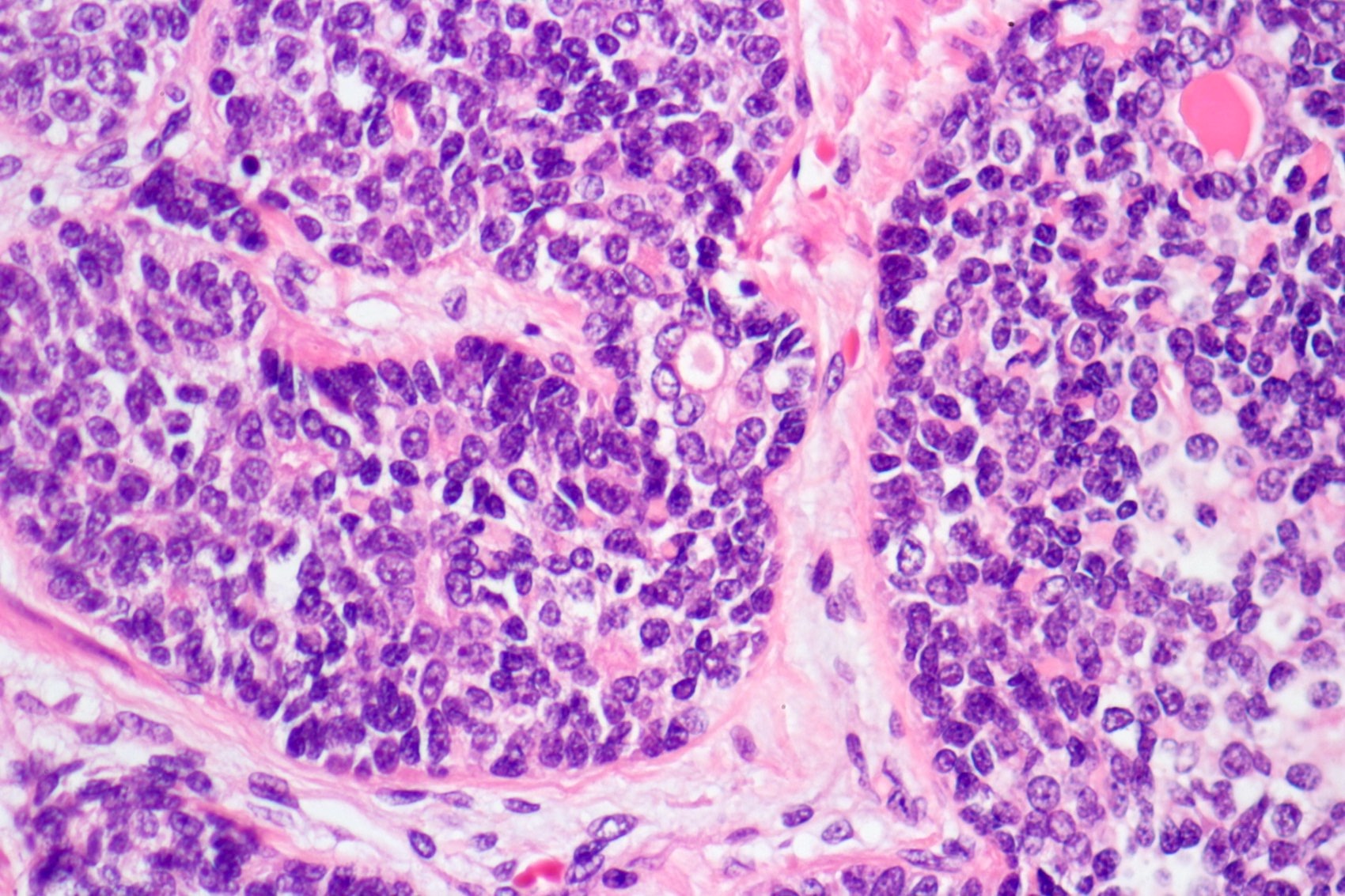

Combination of basaloid and luminal cells

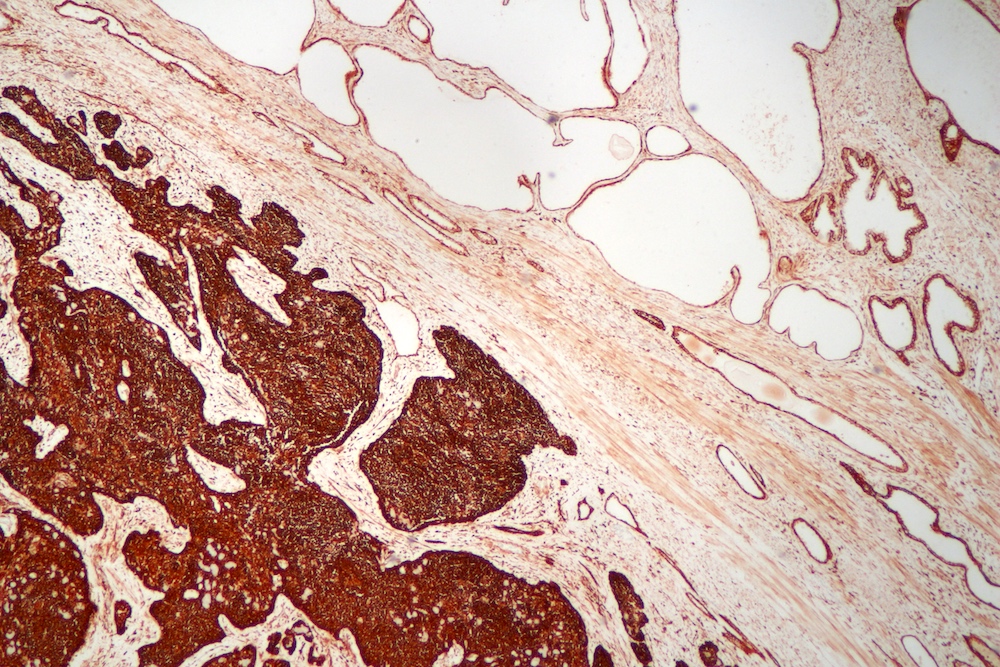
BCL2
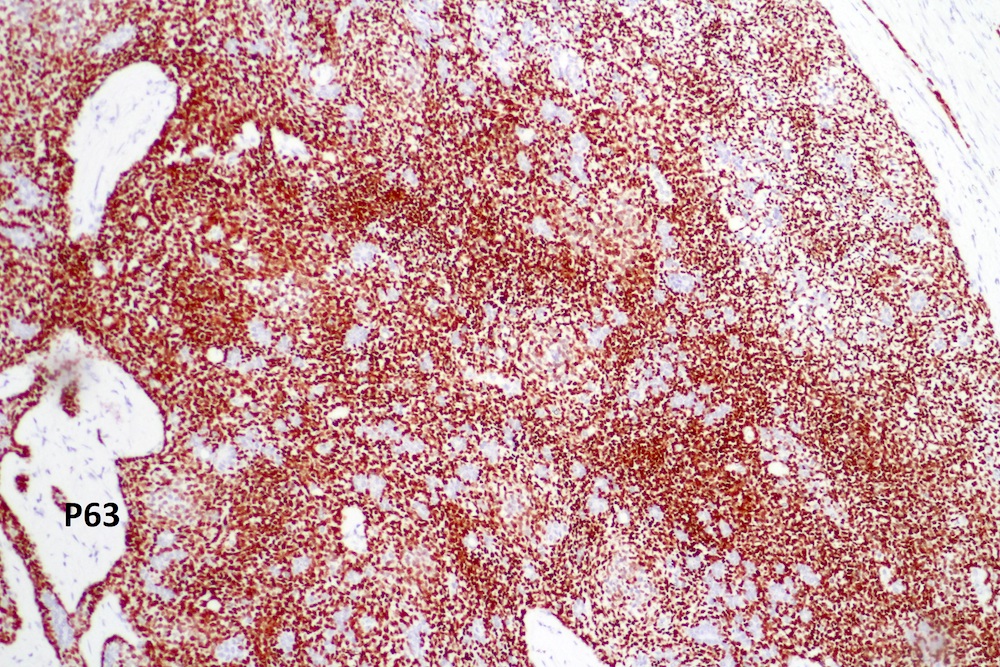
p63

PSA
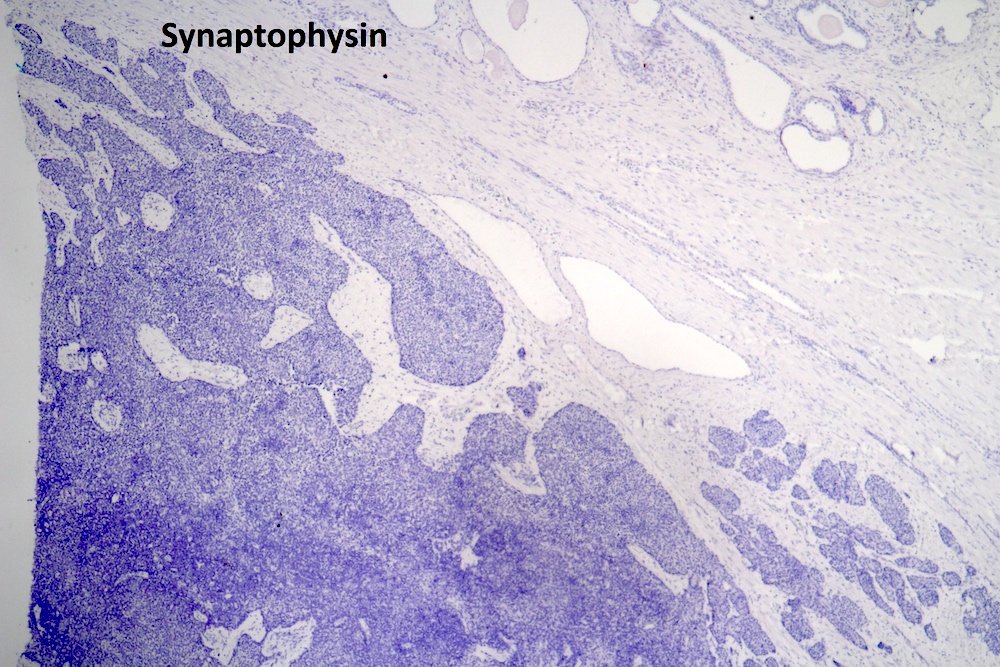
Synaptophysin
Additional references


