


Lung
Infectious
Viral
Herpes simplex
Author: Elliot Weisenberg, M.D.

Last author update: 1 September 2011
Last staff update: 22 December 2020
Copyright: 2003-2024, PathologyOutlines.com, Inc.
PubMed search: herpes simplex [title] pneumonia

Table of Contents
Definition / general | Gross description | Gross images | Microscopic (histologic) description | Microscopic (histologic) imagesCite this page: Weisenberg E. Herpes simplex. PathologyOutlines.com website. https://www.pathologyoutlines.com/topic/lungnontumorHSV.html. Accessed April 26th, 2024.
Definition / general
- Herpes simplex virus (HSV), serotypes HSV-1 and HSV-2, cause acute infection followed by latent phase that may reactivate to infectious form
- See also Skin - nontumor chapter
- HSV-1 and HSV-2 are alpha group herpes viruses with similar genotypes but serologic differences; may both infect the lung
- HSV-1 usually affects oral pharynx; HSV-2 usually causes genital infection
- Virus spreads via sensory neurons where latent infection is established
- Reactivation may be symptomatic or asymptomatic, virus spreads via nerves to mucus membranes or skin, where it replicates
- Newborns (see below), patients with impaired mucosal defenses, burn patients, trauma patients, and severely immunocompromised patients are at greatest risk
- Also associated with coexisting bacterial pneumonia (J Crit Care 2011;26:432.e1)
- Also be caused by intubation of patient with active oral disease
- Immunostains, PCR, culture or electron microscopy can confirm the diagnosis if necessary
Gross description
- Diffusely firm lungs with small yellow / red necrotic areas
Gross images
Contributed by Yale Rosen, M.D.
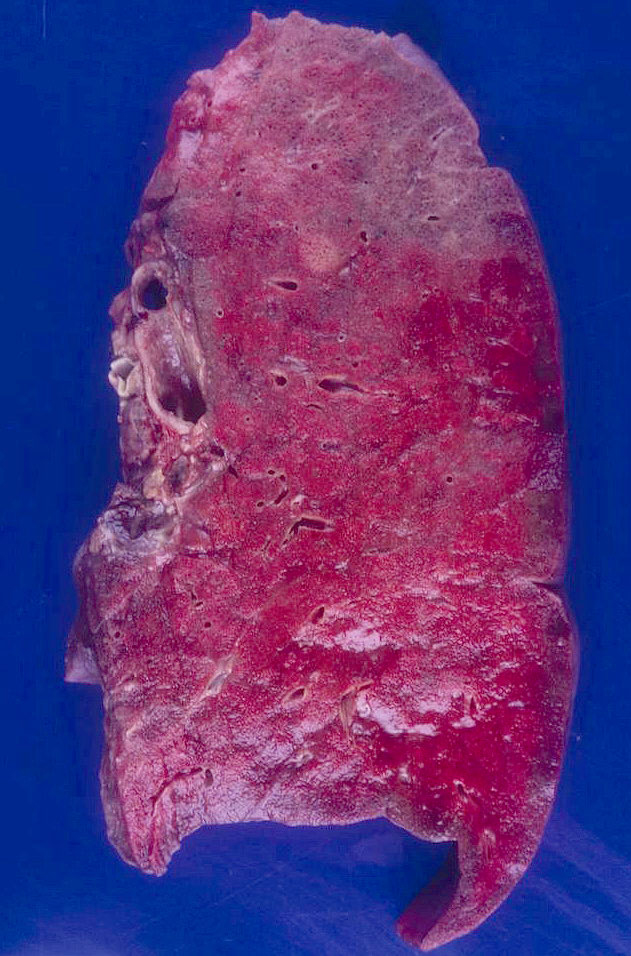
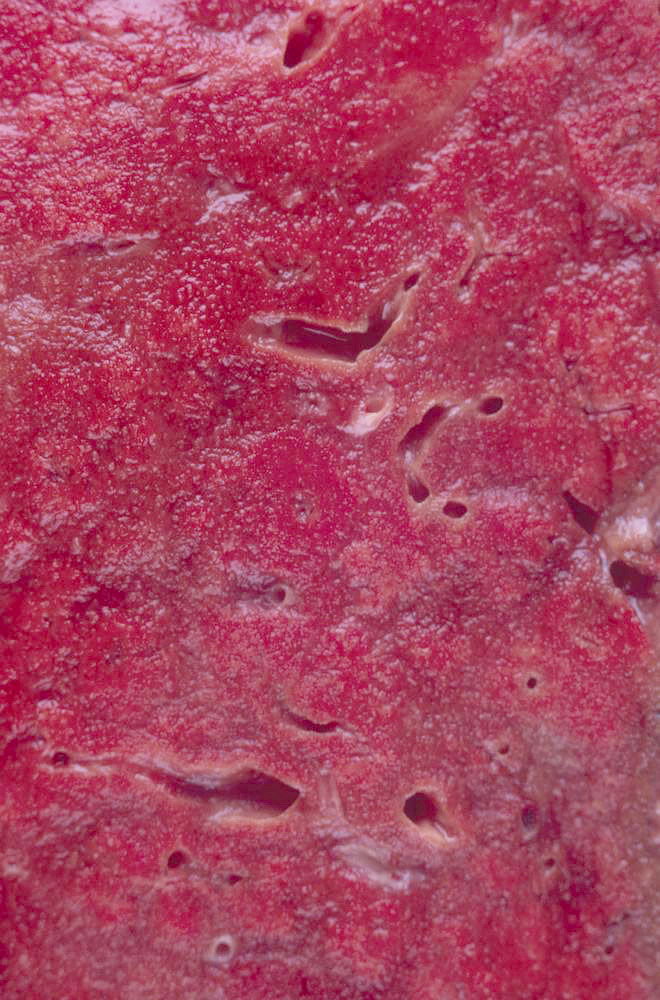
Various images
Microscopic (histologic) description
- Interstitial pneumonia with necrosis of bronchial and alveolar epithelium and acute and chronic inflammatory infiltrate
- Occasional intranuclear viral inclusions at edge of necrotic areas
- Neutrophilic infiltrates may resemble bacterial bronchopneumonia, but Cowdry type A or B nuclear inclusions are generally diagnostic
Microscopic (histologic) images
Images hosted on other servers:

Immunostain highlights
HSV+ cell in
broncheo-alveolar lavage


