
Soft tissue
Adipose tissue tumors
Lipoma and variants
Lipoma
Author: Salvatore Lorenzo Renne, M.D.
Resident / Fellow Advisory Board: Erna Forgó, M.D.
Deputy Editor-in-Chief: Borislav A. Alexiev, M.D.

Last author update: 13 December 2021
Last staff update: 4 December 2023
Copyright: 2002-2025, PathologyOutlines.com, Inc.
PubMed Search: Lipoma [title] soft tissue pathology review [ptyp]
Table of Contents
Definition / general | Essential features | ICD coding | Epidemiology | Sites | Pathophysiology | Etiology | Clinical features | Diagnosis | Radiology description | Radiology images | Prognostic factors | Case reports | Treatment | Clinical images | Gross description | Gross images | Microscopic (histologic) description | Microscopic (histologic) images | Virtual slides | Cytology description | Cytology images | Positive stains | Negative stains | Molecular / cytogenetics description | Molecular / cytogenetics images | Videos | Sample pathology report | Differential diagnosis | Additional references | Practice question #1 | Practice answer #1 | Practice question #2 | Practice answer #2Cite this page: Renne SL. Lipoma. PathologyOutlines.com website. https://www.pathologyoutlines.com/topic/softtissueadiposelipoma.html. Accessed September 13th, 2025.
Definition / general
- Benign tumor composed of mature adipocytes
Essential features
- Most common soft tissue tumor
- Mostly subcutaneous, < 5 cm
- Radiologically, grossly and microscopically same as normal fat
- In large (> 10 cm) and deep seated / retroperitoneal tumors, exclusion of MDM2 amplification is required for diagnosis
Epidemiology
- Most common mesenchymal tumor in adults (Acta Orthop Scand 1983;54:929)
- M = F (slightly more common in males)
- Rare in children
Sites
- Superficial (subcutaneous) soft tissue
- Upper back, proximal extremities and abdominal region
- Subset deep seated (intramuscular, parosteal, visceral)
Pathophysiology
- Reactivated expression of HMGA2 protein (J Biol Chem 2000;275:14394, Am J Hum Genet 2005;76:340)
Etiology
- Unknown at this time
Clinical features
- Painless, subcutaneous mass
- In special site, might have specific symptoms (i.e. gastrointestinal → melena)
- 5% multiple (Acta Orthop Scand 1983;54:929)
- Cowden syndrome (J Med Genet 1999;36:360)
- Bannayan-Riley-Ruvalcaba syndrome (GeneReviews: PTEN Hamartoma Tumor Syndrome [Accessed 18 November 2021])
- Associated with obesity
Diagnosis
- Clinical features (Eur J Surg Oncol 2021 Oct 18 [Epub ahead of print])
- < 5 cm
- Soft
- Superficial
- Imaging
- Ultrasonography
- Computed tomography (deep seated)
- Magnetic resonance (deep seated)
Radiology description
- Ultrasonography
- Variably echogenic mass (Radiographics 2004;24:1433)
- Mostly isoechoic (Radiology 2004;233:763)
- No shadowing
- No flow with color Doppler
- CT (Radiographics 2004;24:1433)
- Superficial
- Circumscribed
- Low attenuation
- Calcification might be present
- MRI
- Same signal as subcutaneous fat in all sequences
Radiology images
Contributed by Salvatore Lorenzo Renne, M.D.
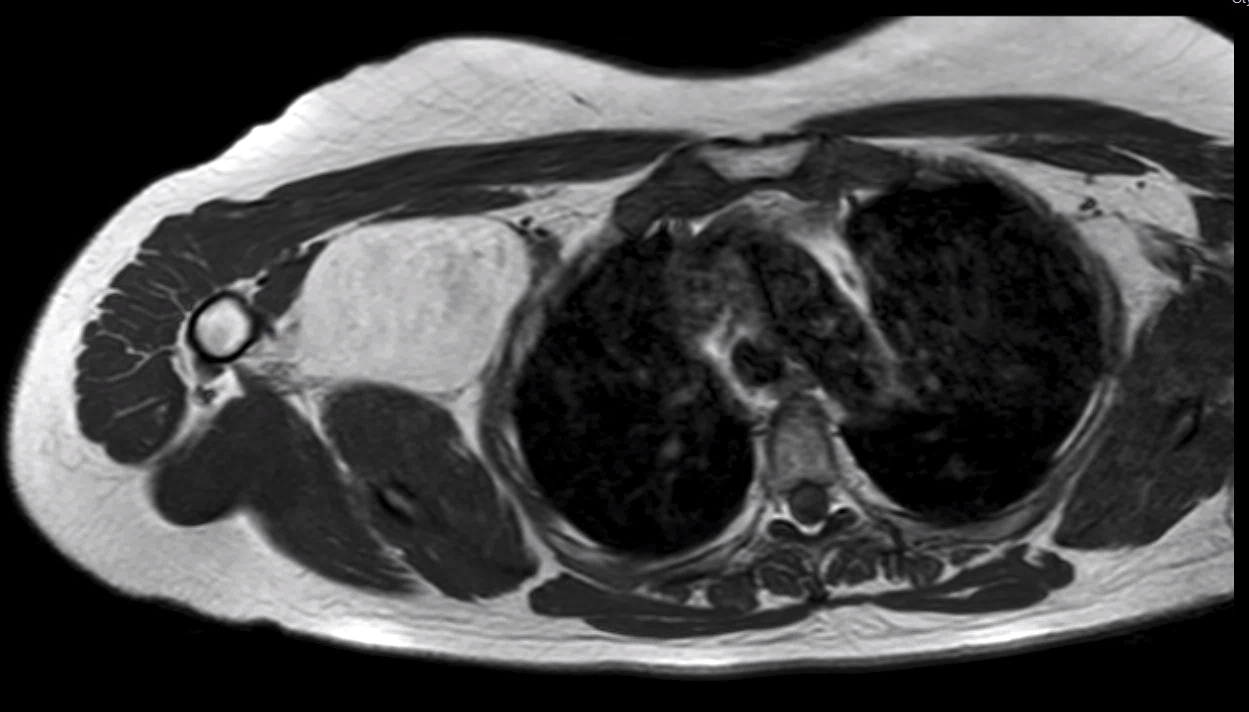
Isointense mass on MRI
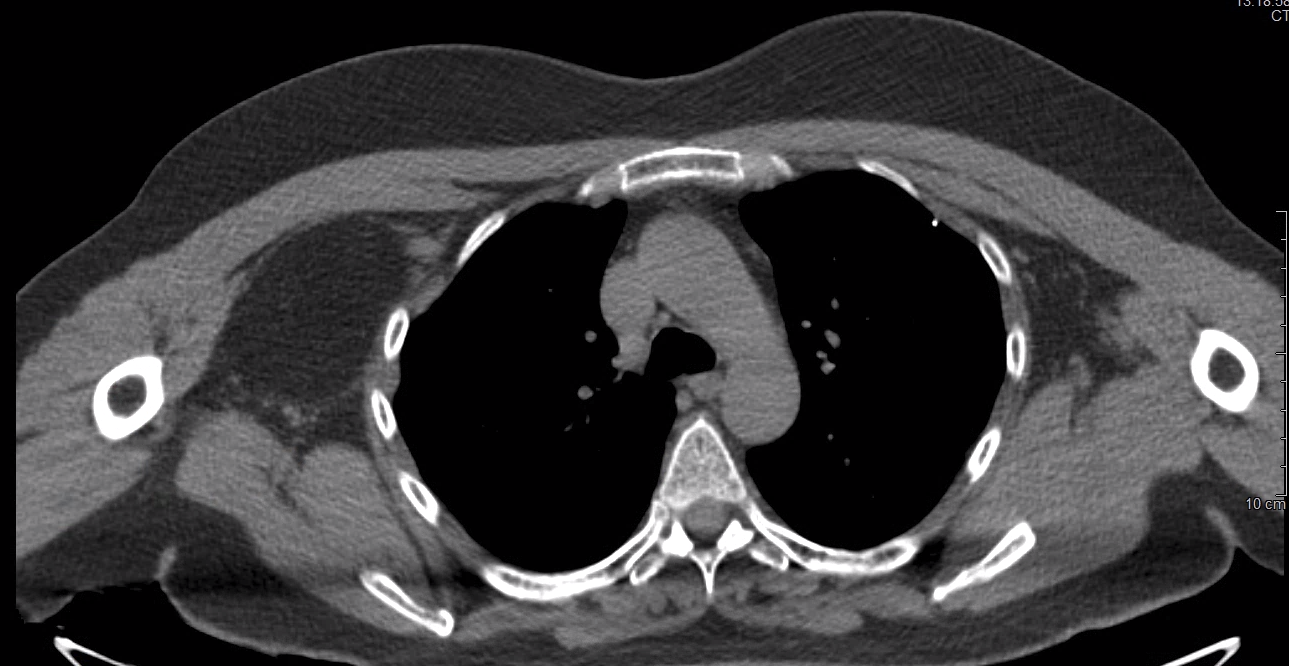
Discrete incapsulated mass on CT
Prognostic factors
- Recurrence < 5%
- Incomplete surgery, higher local recurrence
Case reports
- 37 year old woman with giant infiltrative tumor of face (AJNR Am J Neuroradiol 2003;24:283)
- 58 year old and 63 year old women with tumors of pectoralis major muscle simulating a breast mass (Ann Acad Med Singapore 2005;34:275, Arch Pathol Lab Med 2011;135:1061)
- Well circumscribed tumor of sternocleidomastoid muscle (Auris Nasus Larynx 2004;31:283)
Treatment
- Simple excision
Clinical images
Contributed by Mark R. Wick, M.D.
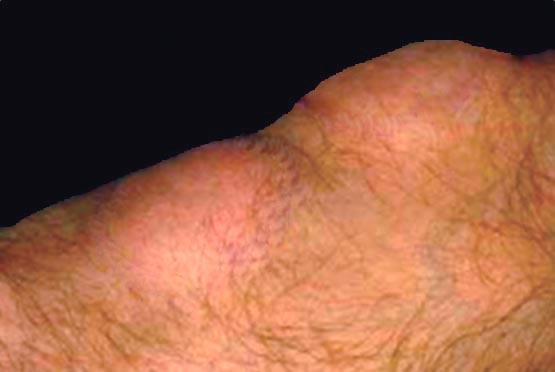
Superficial
Gross description
- Well circumscribed
- Nodular
- Cut surface homogeneous
- Fatty appearance
- Usually small (< 5 cm)
- Osteolipoma and chondrolipoma can be recognized grossly
Gross images
Contributed by Salvatore Lorenzo Renne, M.D. and AFIP images
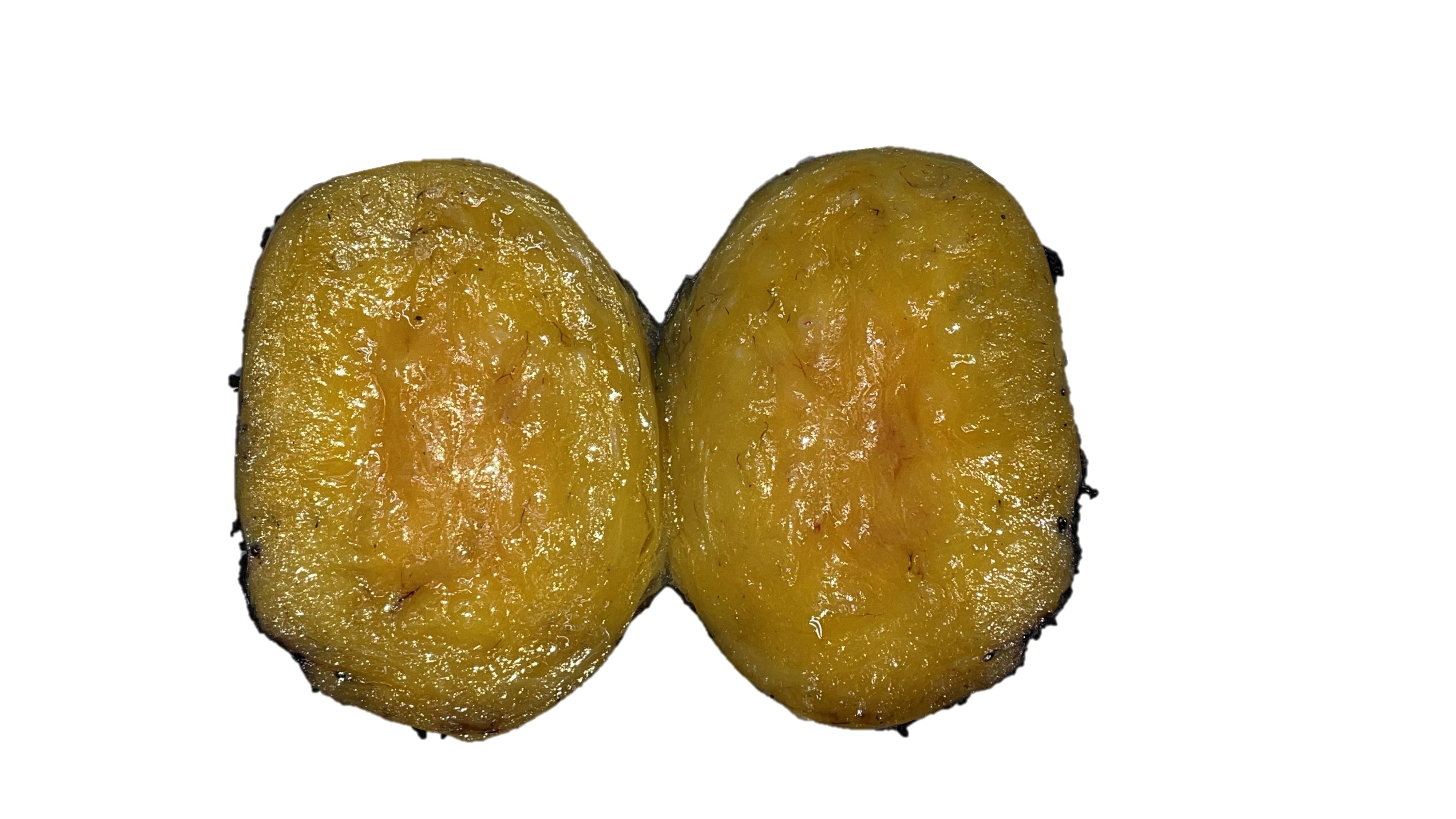
Lipoma gross appearance
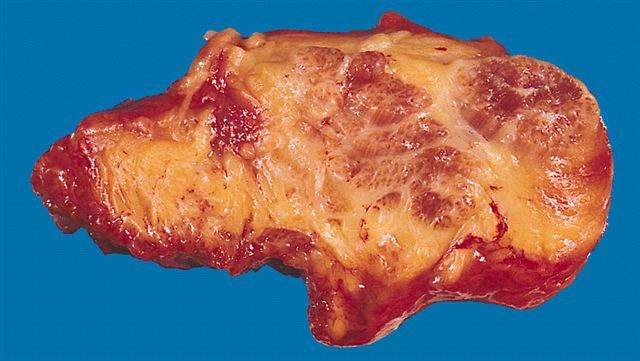
Yellow adipose tissue within skeletal muscle
Microscopic (histologic) description
- Proliferation of mature adipocytes
- Paucicellular fibrous septa can be present
- Fat necrosis is often found in larger tumor
- Skeletal muscle fibers are infiltrated in intramuscular lipoma
- Subtypes
- Intramuscular lipoma
- Chondrolipoma
- Visceral sites
- Submucosal lipoma of the colon
- Endobronchial lipoma
Microscopic (histologic) images
Contributed by Salvatore Lorenzo Renne, M.D., Mark R. Wick, M.D., Charanjeet Singh, M.D. and AFIP images

Superficial, well circumscribed neoplasm

Mature adipose tissue
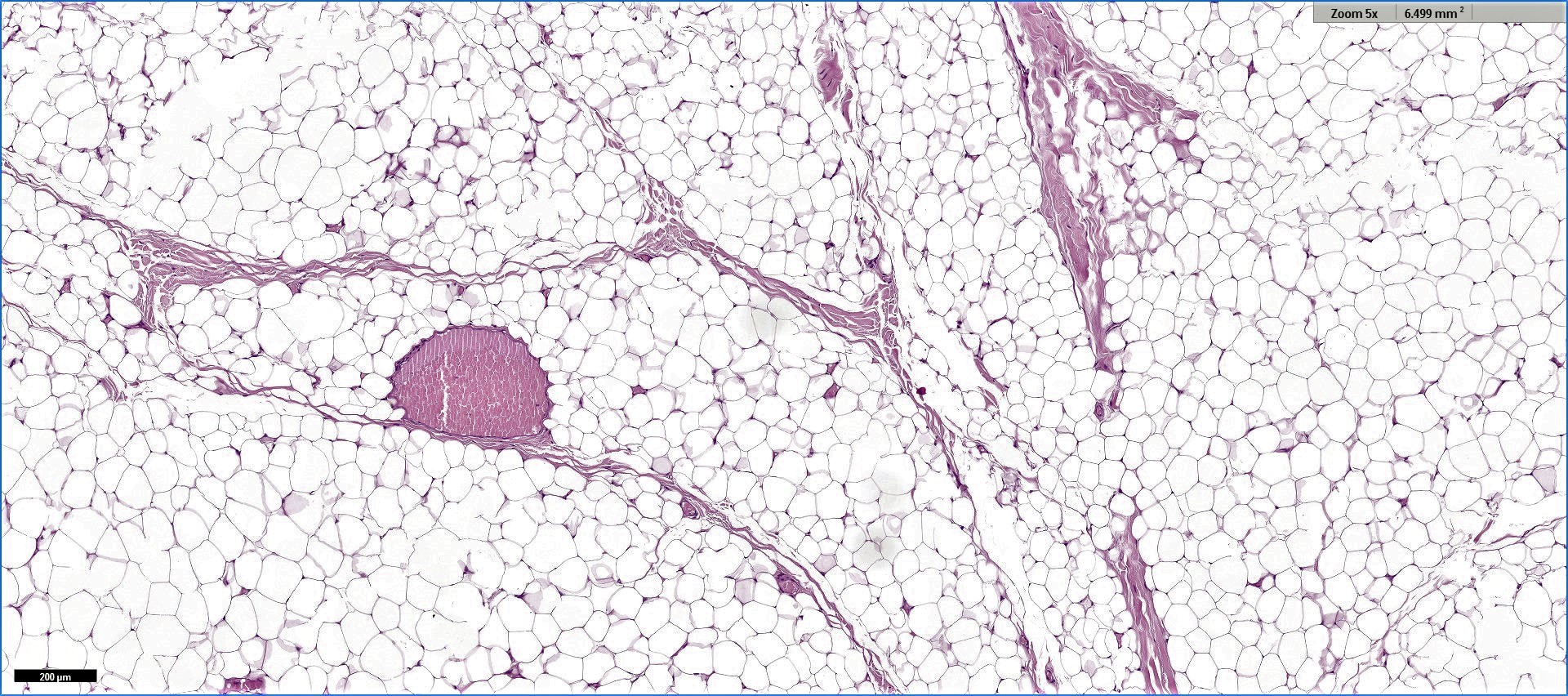
Paucicellular fibrous septa
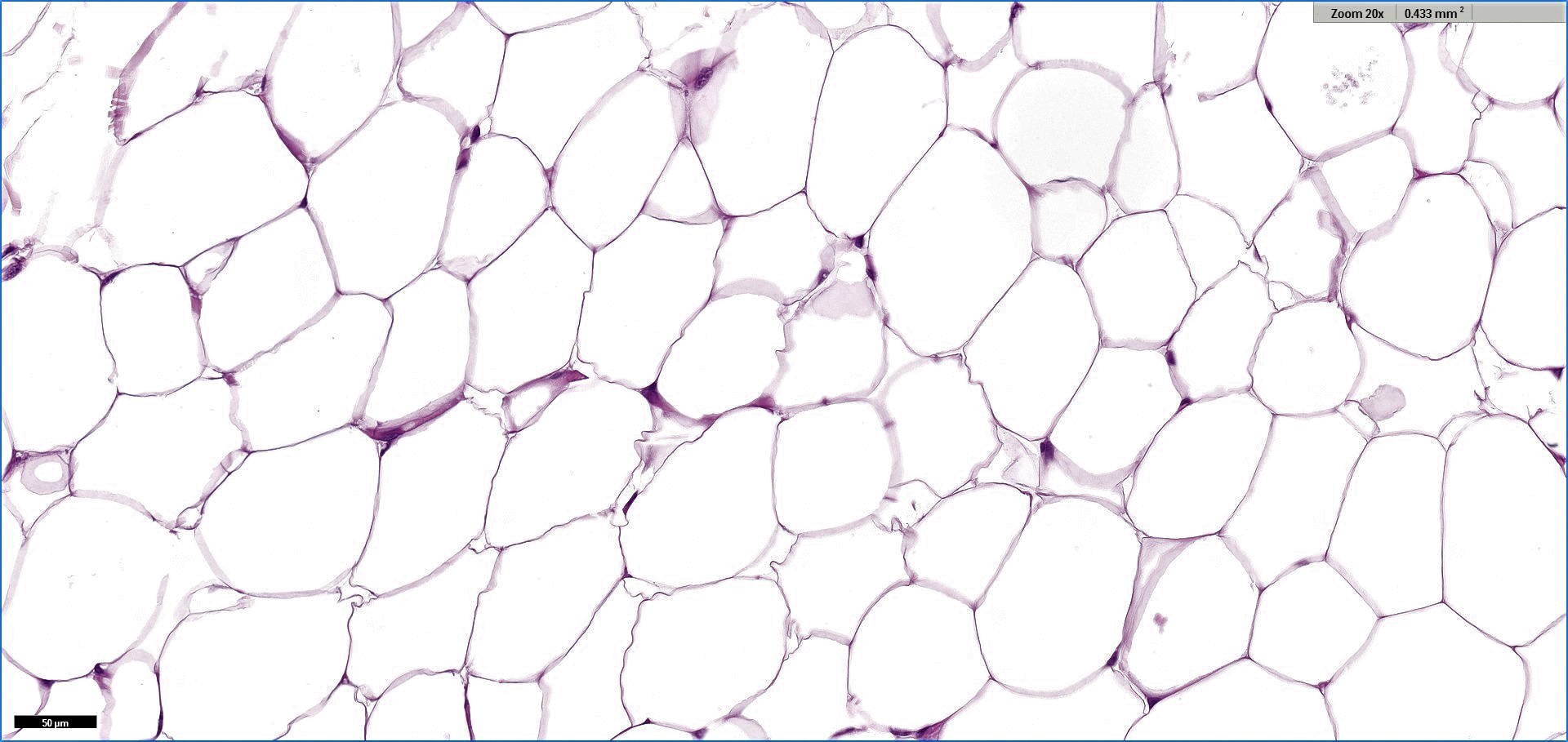
Mature adipose proliferation
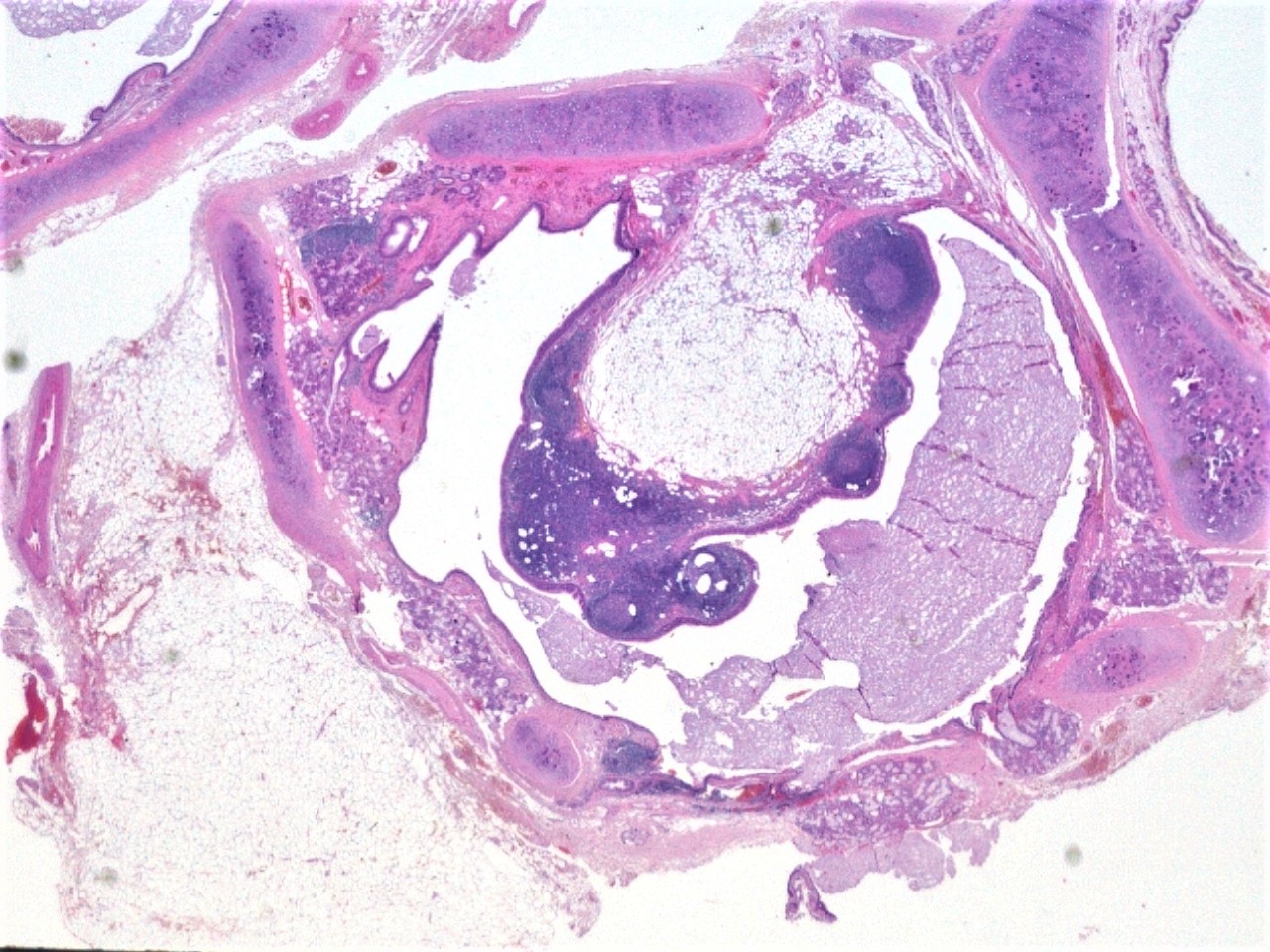
Endobronchial lipoma
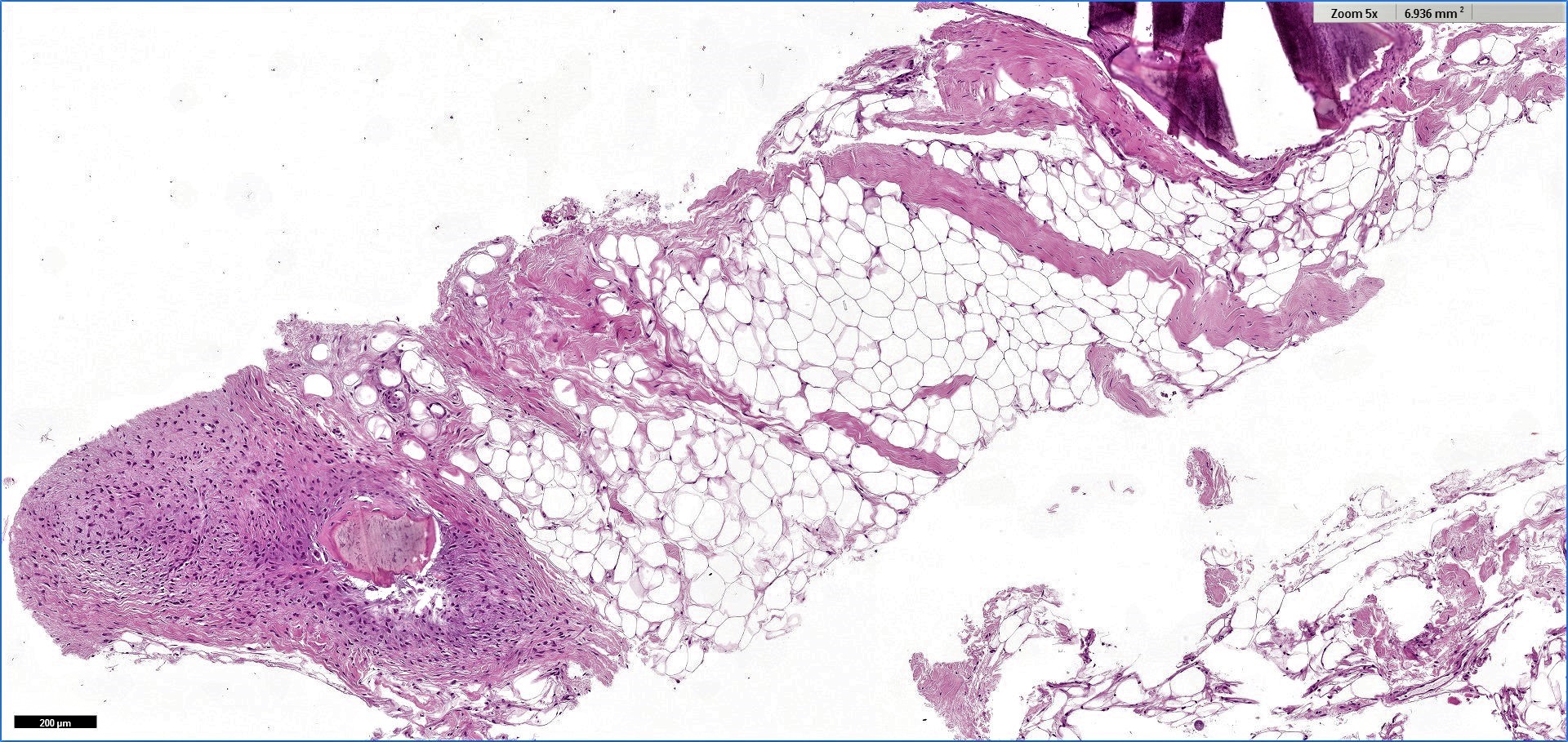
Osteolipoma
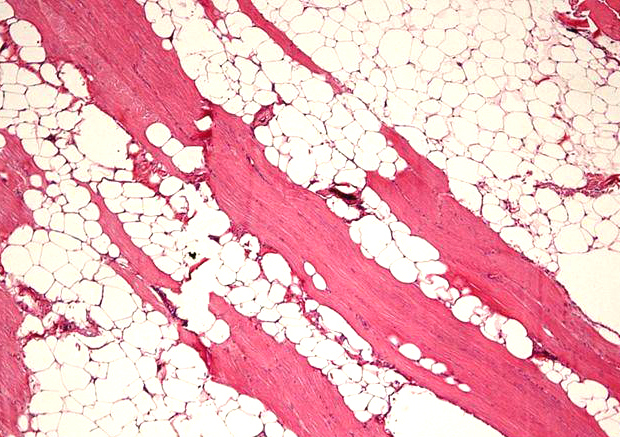
Intramuscular type
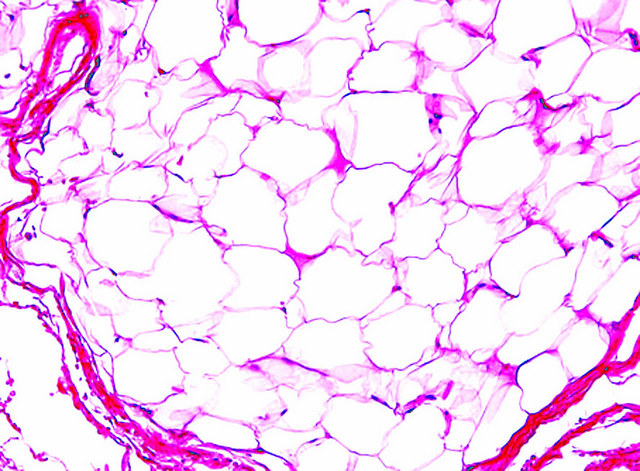

Lipoma
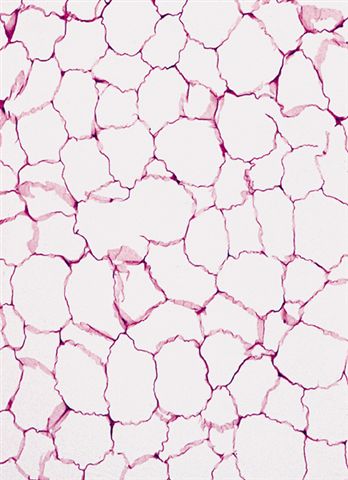
Normal adult fat cells
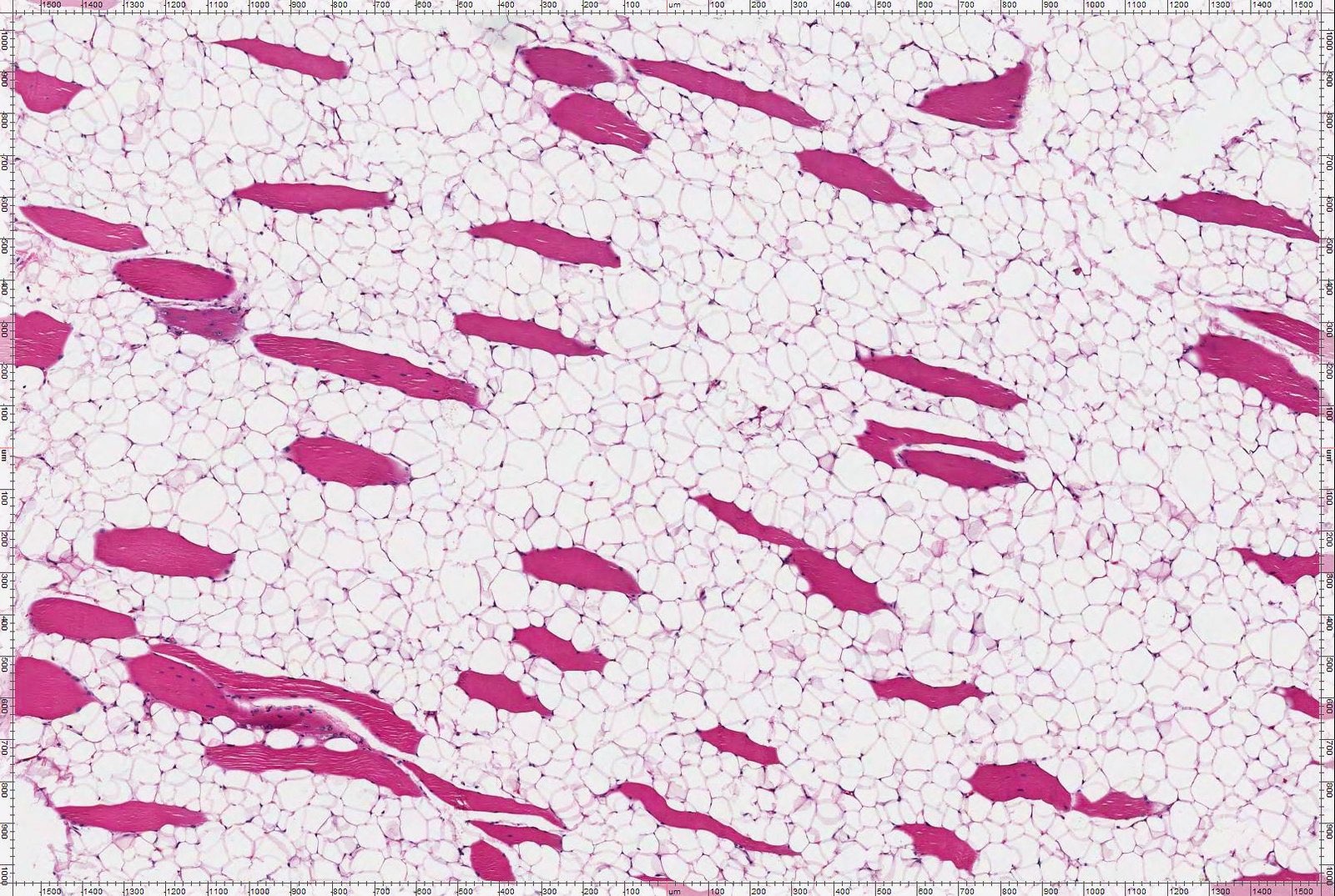
Intramuscular lipoma
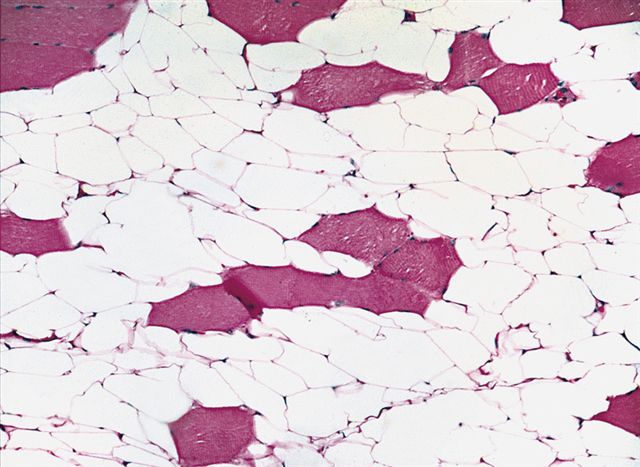
Adipocytes and atrophic muscle
Virtual slides
Images hosted on other servers:

Lipoma with fat necrosis

Intussusception by submucosa lipoma

Sigmoid polyp lipoma
Cytology description
- Mature adipocytes with single lipid large droplet
- Inconspicuous nucleus
Cytology images
Images hosted on other servers:

Adipocytes
Positive stains
- Rb (G3-245) preserved positivity (lost in spindle cell pleomorphic lipoma) (Am J Surg Pathol 2012;36:1119)
- HMGA2 (negative in normal fat) (Mod Pathol 2010;23:1657)
Negative stains
Molecular / cytogenetics description
- Structural rearrangement of chromosome bands12q13-q15 or HMGA2 gene
- Structural rearrangement of chromosome band 6p21 or HMGA1 gene
- Absence of MDM2 amplification (Am J Surg Pathol 2007;3:1476, Histopathology 2021 Sep 14 [Epub ahead of print])
- Absence of CDK4 amplification (Am J Surg Pathol 2007;3:1476)
- Absence of giant marker / ring chromosome (Cancer Genet Cytogenet 2004;150:93)
- Absence of 13p loss (Cancer Genet Cytogenet 2004;150:93)
Molecular / cytogenetics images
Contributed by Salvatore Lorenzo Renne, M.D.
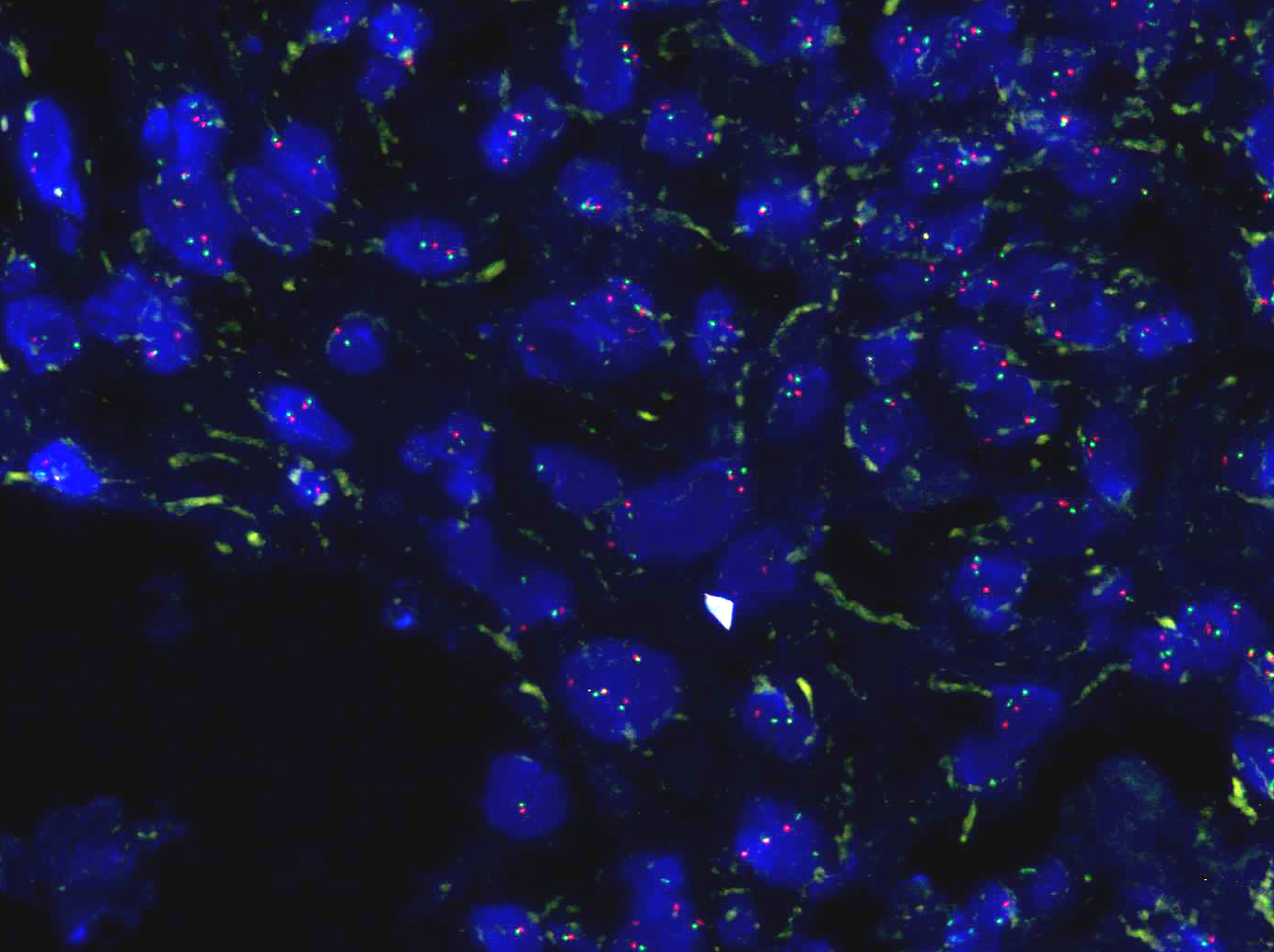
MDM2 nonamplified
Videos
Lipoma and its differential diagnosis
Sample pathology report
- Soft tissue, subcutaneous trunk, excision:
- Lipoma
- Soft tissue, deep (deltoid), excision:
- Lipoma, intramuscular (see comment)
- Comment: Sections show a mature adipocytic neoplasm. No cytologic atypia or mitotic activity is identified. Immunohistochemical stain shows negativity for MDM2. Fluorescence in situ hybridization does not show amplification of MDM2 gene.
Differential diagnosis
- Angiolipoma:
- Typically composed of two elements: mature adipocytes and branching capillary sized vessels, which often contain fibrin thrombi
- Relative proportions of adipocytes and vessels varies and some lesions are almost completely composed of vascular channels
- Spindle cell / pleomorphic lipoma:
- Atypical lipomatous tumor / well differentiated liposarcoma:
- Size > 10 cm
- Deep seated
- Atypical cells
- MDM2 IHC positivity
- MDM2 gene FISH cluster amplification
- Mobile encapsulated adipose tissue (MEAT)
Additional references
Practice question #1
The tumor shown above is found in chest subcutis of a 58 year old woman. What is the most likely diagnosis?
- Angiolipoma
- Atypical lipomatous tumor
- Lipoma
- Normal fat
- Spindle cell lipoma
Practice answer #1
C. Lipoma. The mass is in the subcutis, small (< 5 cm), well circumscribed and homogenously composed of adipocytes.
Comment Here
Reference: Lipoma
Comment Here
Reference: Lipoma
Practice question #2
Which of the following is true about a lipoma?
- Diagnosis is often made without immunohistochemistry
- Highly infiltrative lesion, which leads the majority to recur
- It is the most common benign neoplasm
- It is usually large (> 10 cm) and located in deep soft tissue or retroperitoneum
- Patient always reports a history of trauma
Practice answer #2
A. Diagnosis is often made without immunohistochemistry. Diagnosis can be done on H&E in most cases and in the appropriate clinicopathological setting (i.e. small, superficial, homogeneous lesion, composed of uniform adipocytic cells without atypia).
Comment Here
Reference: Lipoma
Comment Here
Reference: Lipoma


